

Epidural Steroid Block ( Tfesi, Caudal, Interlaminar )
What is an Epidural Steroid Block?

An Epidural Steroid Block is a minimally invasive, image-guided pain management procedure used to reduce inflammation and relieve pain originating from irritated spinal nerves. Steroid medication is injected into the epidural space around the spinal nerves, helping decrease swelling, inflammation, and nerve irritation.
This procedure is highly effective for patients suffering from chronic back pain, leg pain, and nerve-related symptoms caused by spinal disorders.
Indications
Epidural Steroid Injections are commonly recommended for:
- Lumbar or cervical disc herniation
- Sciatica and radiating leg pain
- Degenerative disc disease
- Spinal canal stenosis
- Nerve root compression (Radiculopathy)
- Failed Back Surgery Syndrome (FBSS)
- Post-Laminectomy Scar Syndrome
- Chronic neck and lower back pain with nerve involvement
In many patients, epidural injections can provide long-term pain relief and help avoid or delay surgery.
Types of Epidural Steroid Injections
1. Transforaminal Epidural Steroid Injection (TFESI)
TFESI is the most targeted approach. Using fluoroscopic (X-ray) guidance, medication is delivered directly around the affected nerve root, providing precise pain relief.
2. Interlaminar Epidural Injection
Medication is injected into the epidural space between the spinal laminae, allowing it to spread across multiple spinal levels and reduce inflammation.
3. Caudal Epidural Injection
The epidural space is accessed through the sacral opening near the tailbone. This technique is useful when multiple levels of the spine require treatment.
Procedure
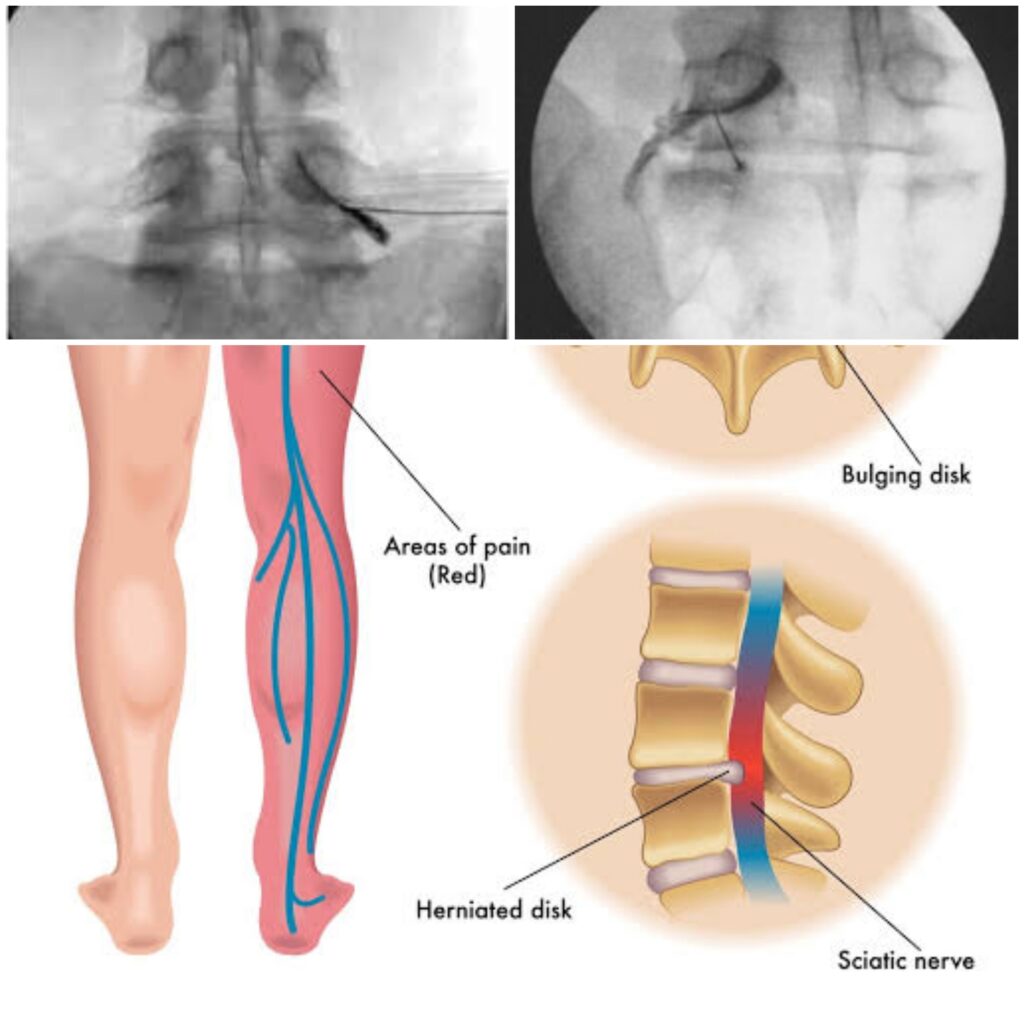
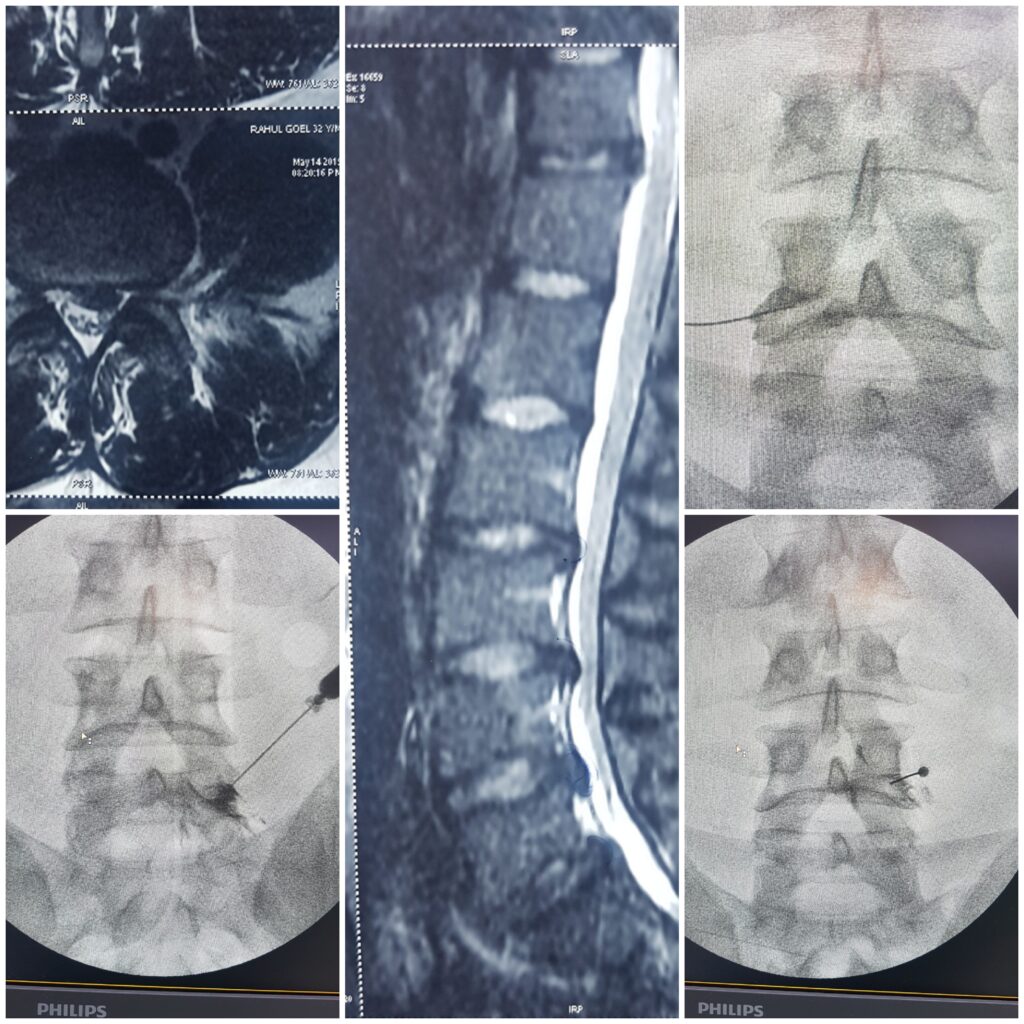
At our clinic, Epidural Steroid Injections are performed by experienced Interventional Pain Specialists under strict sterile conditions.
During the Procedure:
- The patient lies comfortably on the procedure table.
- The skin is cleaned and local anesthesia is administered.
- Fluoroscopic (real-time X-ray) guidance is used for accurate needle placement.
- Contrast dye may be injected to confirm the correct location.
- Steroid medication, with or without local anesthetic, is injected into the epidural space.
- The procedure generally takes 15–30 minutes.
Patients are observed briefly after the procedure and discharged on the same day.
What to Expect After the Procedure
- Temporary numbness or pain relief may occur immediately due to the local anesthetic.
- Pain relief from the steroid usually begins within 3–10 days.
- Mild soreness at the injection site is normal.
- Some patients may experience temporary pain flare-up before improvement occurs.
Special Instructions
Before the Procedure
- Inform your doctor about all medications and medical conditions.
- Certain blood-thinning medications may need to be stopped as advised.
- A light meal can usually be taken up to 4 hours before the procedure.
- Arrange for someone to drive you home afterward.
After the Procedure
- Rest for the remainder of the day.
- Avoid driving on the day of the injection.
- Avoid swimming, hot tubs, or baths for 24 hours.
- Do not apply heat to the injection site for 24 hours.
- Most patients can return to normal activities and work the following day.
Benefits
- Effective relief from back, neck, and leg pain
- Reduced nerve inflammation
- Improved mobility and function
- Reduced need for pain medications
- May help avoid or postpone surgery
- Quick outpatient procedure with minimal downtime
Possible Side Effects and Complications
Epidural Steroid Injections are generally safe when performed by trained specialists. Possible side effects may include:
- Temporary soreness at the injection site
- Headache
- Facial flushing
- Mild bleeding or bruising
- Temporary numbness or tingling
- Temporary increase in blood sugar levels in diabetic patients
Patients with diabetes, hypertension, heart disease, or bleeding disorders should discuss their medical history with the treating physician before the procedure.
Why Choose Dr. Anurag Aggarwal?
Dr. Anurag Aggarwal is a highly experienced Interventional Pain Specialist offering advanced image-guided pain procedures for chronic spine and nerve pain conditions. Using precise fluoroscopic guidance and evidence-based techniques, he provides safe, effective, and personalized treatment aimed at improving quality of life and restoring daily function
Book an Appointment
If you are suffering from persistent back pain, sciatica, or nerve-related pain, schedule a consultation with Dr. Anurag Aggarwal to determine whether an Epidural Steroid Block is the right treatment option for you.